Pierre Fresnay
7 titles
Filmography
7 results

The Murderer Lives at Number 21
(1942)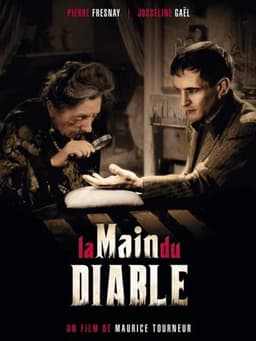
Carnival of Sinners
(1943)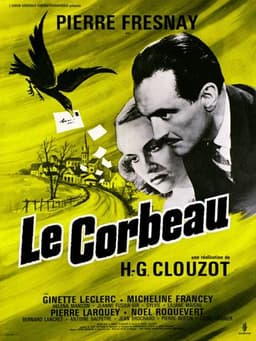
Le Corbeau
(1943)A mysterious writer of poison-pen letters, known only as Le Corbeau (the Raven), plagues a French provincial town, unwittingly exposing the collective suspicion and rancor seething beneath the community’s calm surface. Made during the Nazi Occupation of France, Henri-Georges Clouzot’s LE CORBEAU was attacked by the right-wing Vichy regime, the left-wing Resistance press, and the Catholic Church, and it was banned after the Liberation. But some—including Jean Cocteau and Jean-Paul Sartre—recognized the powerful subtext to Clouzot’s anti-informant, anti-Gestapo fable, and worked to rehabilitate Clouzot’s directorial reputation after the war. LE CORBEAU brilliantly captures a spirit of paranoid pettiness and self-loathing turning an occupied French town into a twentieth-century Salem.

Monsieur Vincent
(1947)A compassionate and beautiful film about the remarkably selfless life of Saint Vincent de Paul (Pierre Fresnay, Grand Illusion), who devoted his life to caring for the poor and the sick, through poverty and plague. Director Maurice Cloche's powerful and dramatic biopic reveals how St. Vincent de Paul's unwavering commitment to the poor made him one of the greatest humanitarians in history.

Marius
(1931)
César
(1936)In the final chapter of The Marseille Trilogy, Marcel Pagnol returns his compassionate gaze to his weathered characters as they discover the possibility of reconciliation and the durability of love. Leaping forward twenty years, the trilogy continues with the death of Fanny’s husband, Panisse, and the discovery of her secret by her son, Césariot. The young man resolves to track down his biological father, Marius, whose life has been fraught with calamity and poverty. The only film in the trilogy written expressly for the screen and directed by Pagnol, César resolves the protagonists’ star-crossed destinies with the garrulous wit and understated naturalism that have made this epic love story a landmark of humanist filmmaking.

The Man Who Knew Too Much
(1934)An ordinary couple vacationing in Switzerland get embroiled in international intrigue when their daughter is kidnapped to cover up a nefarious plot.